
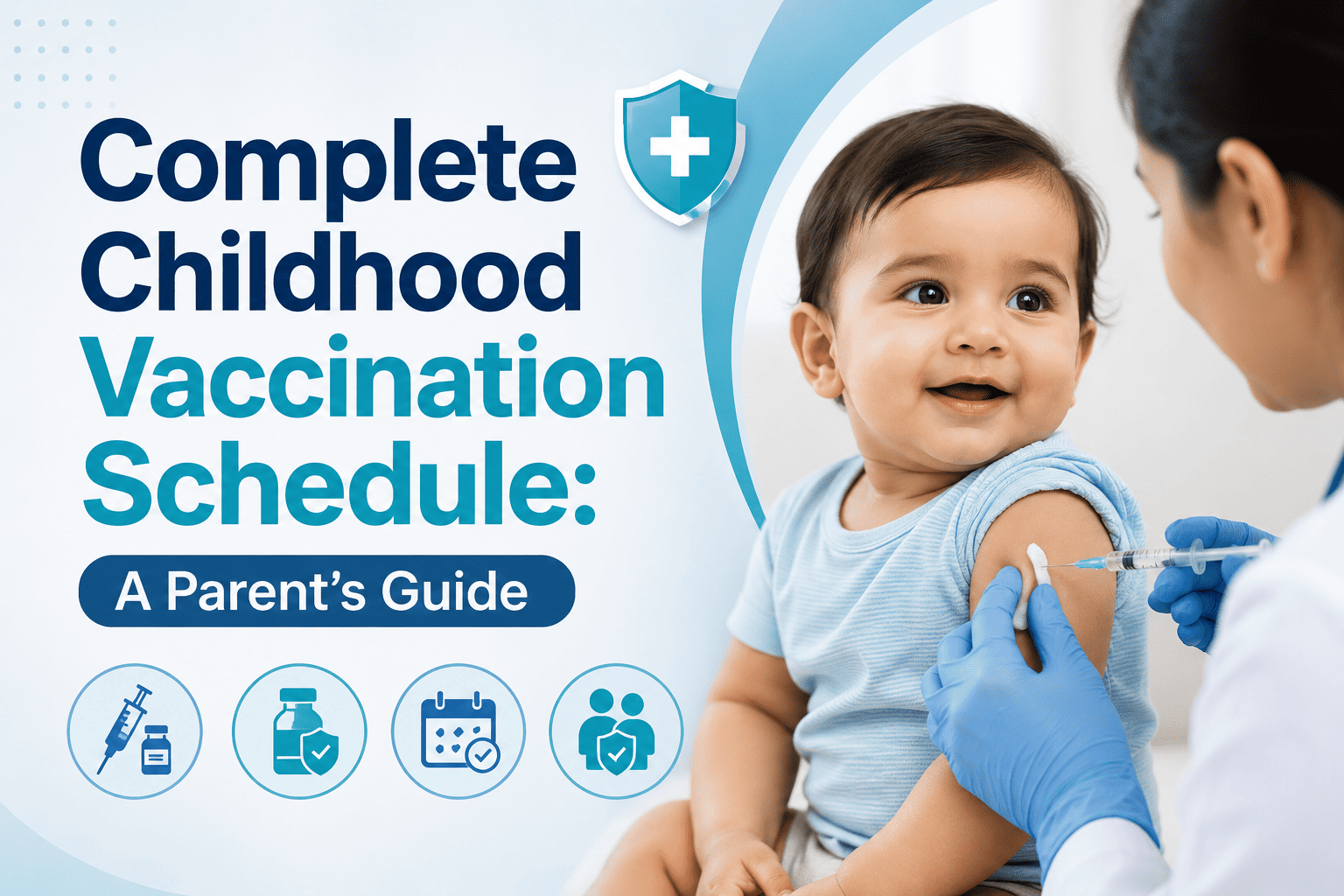
Complete Childhood Vaccination Schedule: A Parent’s Guide
Vaccination is one of the most important steps parents can take to protect their child’s health. Vaccines help prevent serious diseases, reduce complications, and contribute to a healthier future for children and communities.
Many parents have questions about when vaccines should be given, why they are important, and whether missing a dose is a concern. This guide will help you understand the basics of childhood immunization and the importance of staying on schedule.
Why Are Vaccines Important?
Vaccines train the body’s immune system to recognize and fight harmful infections before they cause serious illness.
Vaccination helps protect children against diseases such as:
- Polio
- Measles
- Mumps
- Rubella
- Hepatitis B
- Diphtheria
- Pertussis (Whooping Cough)
- Tetanus
- Rotavirus
- Pneumonia
Many of these diseases can lead to hospitalization, long-term complications, or even become life-threatening.
Recommended Childhood Vaccination Timeline
At Birth
- BCG
- OPV (Oral Polio Vaccine)
- Hepatitis B
6 Weeks
- DPT
- IPV/OPV
- Hepatitis B
- Hib
- Rotavirus
- Pneumococcal Vaccine
10 Weeks
- DPT
- IPV/OPV
- Hib
- Rotavirus
- Pneumococcal Vaccine
14 Weeks
- DPT
- IPV/OPV
- Hib
- Rotavirus
- Pneumococcal Vaccine
9 Months
- Measles-Rubella (MR)
- Additional vaccines as advised by your pediatrician
12–15 Months
- MMR
- Varicella (Chickenpox)
- Hepatitis A
16–24 Months
- Booster doses of DPT
- Polio Booster
- MMR Booster
4–6 Years
- DPT Booster
- Polio Booster
- MMR Booster
Adolescence
Certain vaccines may be recommended during adolescence depending on age, health conditions, and vaccination history.
What If My Child Misses a Vaccine?
Missing a scheduled vaccine does not mean you need to restart the entire vaccination process.
In most cases, a catch-up schedule can be created by your pediatrician to ensure your child remains protected.
If you think your child has missed any vaccines, consult your doctor as soon as possible.
Are Vaccines Safe?
Yes. Vaccines undergo extensive testing and monitoring before being approved for use.
Most children experience only mild side effects such as:
- Mild fever
- Temporary soreness at the injection site
- Mild irritability
- Reduced appetite for a short period
These reactions are generally normal and resolve quickly.
Common Questions Parents Ask
Can vaccines cause the disease they prevent?
No. Vaccines are designed to safely train the immune system without causing the actual disease.
Can my child receive multiple vaccines during one visit?
Yes. Giving multiple recommended vaccines during a single visit is safe and commonly practiced worldwide.
Why are booster doses necessary?
Booster doses help strengthen and extend immunity, ensuring continued protection as children grow.
Tips for Parents
- Keep your child’s vaccination record updated.
- Follow the schedule recommended by your pediatrician.
- Set reminders for upcoming vaccinations.
- Do not delay vaccines without medical advice.
- Discuss any concerns openly with your child’s doctor.
Protecting Your Child’s Future
Vaccination is one of the safest and most effective ways to protect children from serious diseases. Staying on schedule ensures your child receives timely protection during the years when they are most vulnerable.
If you have questions about your child’s vaccination schedule or need guidance regarding missed doses, consult Dr. Saroj Kumar Das for personalized pediatric care and vaccination advice.
A healthy childhood begins with prevention, and vaccination is one of the strongest foundations for lifelong health.