
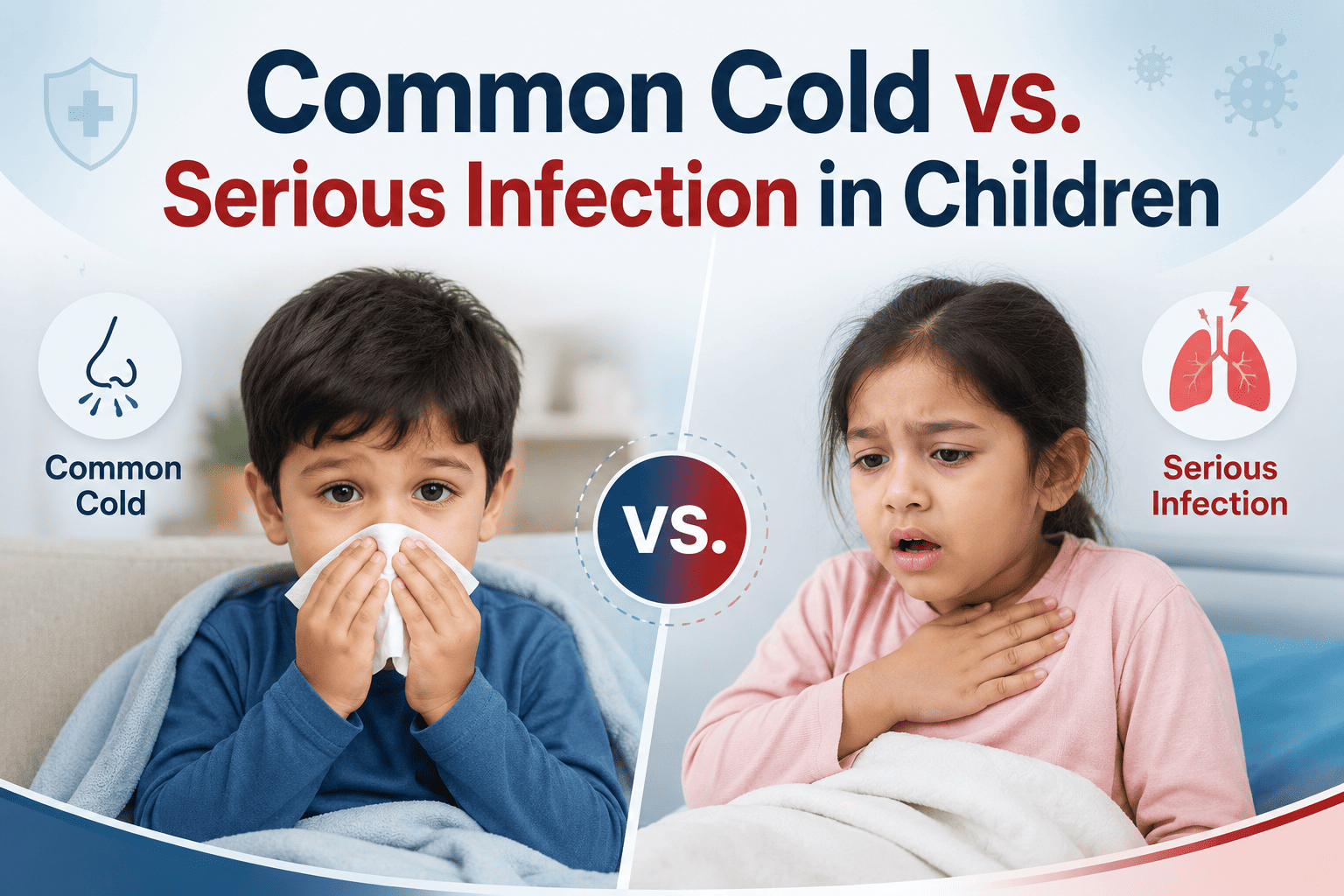
Common Cold vs. Serious Infection in Children
Children often experience coughs, colds, and fevers as they grow. In fact, it is normal for young children to catch several viral infections each year, especially during school seasons and weather changes. While most common colds improve on their own with rest and care, some symptoms may indicate a more serious infection that requires medical attention.
As a parent, understanding the difference between a simple cold and a potentially serious illness can help you make informed decisions about your child’s health.
What Is a Common Cold?
The common cold is a viral infection that affects the nose, throat, and upper respiratory tract. It is one of the most frequent illnesses seen in children.
Common Symptoms of a Cold
- Runny or blocked nose
- Sneezing
- Mild fever
- Sore throat
- Mild cough
- Reduced appetite
- Mild tiredness
Most colds improve within 7 to 10 days without the need for antibiotics.
Why Do Children Catch Colds So Often?
Children have developing immune systems and are exposed to many viruses through:
- School and daycare
- Playgrounds
- Family members
- Shared toys and surfaces
Frequent colds during childhood are usually a normal part of immune system development.
Signs That It May Be More Than a Common Cold
While most viral infections are harmless, some symptoms may suggest a more serious infection.
High or Persistent Fever
Seek medical advice if:
- Fever remains high for several days.
- Fever returns after initially improving.
- Your child appears unusually unwell.
Difficulty Breathing
Watch for:
- Fast breathing
- Wheezing
- Chest pulling inward while breathing
- Shortness of breath
Breathing difficulties should never be ignored.
Excessive Sleepiness
If your child is difficult to wake, unusually lethargic, or not responding normally, medical evaluation is important.
Poor Fluid Intake
Children can become dehydrated quickly.
Warning signs include:
- Dry mouth
- No tears when crying
- Reduced urination
- Refusal to drink fluids
Severe Cough
A persistent or worsening cough, especially when accompanied by breathing difficulty, may require medical attention.
Common Serious Infections in Children
Ear Infections
Symptoms may include:
- Ear pain
- Irritability
- Fever
- Difficulty sleeping
Pneumonia
Possible symptoms:
- High fever
- Fast breathing
- Persistent cough
- Chest discomfort
Throat Infections
Symptoms may include:
- Severe sore throat
- Difficulty swallowing
- Swollen glands
- Fever
Urinary Tract Infections (UTI)
Especially in younger children, symptoms may include:
- Fever without obvious cold symptoms
- Irritability
- Poor feeding
- Pain during urination
When Are Antibiotics Needed?
One common misconception is that every cold requires antibiotics.
Most common colds are caused by viruses, and antibiotics do not work against viral infections.
Antibiotics should only be used when prescribed by a qualified pediatrician for bacterial infections.
Using antibiotics unnecessarily may contribute to antibiotic resistance and other complications.
Home Care Tips for Common Colds
Parents can help children recover by:
- Encouraging plenty of fluids
- Providing adequate rest
- Offering nutritious meals
- Keeping the child comfortable
- Monitoring symptoms carefully
Most children recover completely with supportive care.
When Should Parents Visit a Pediatrician?
Schedule a medical evaluation if your child has:
- Fever lasting more than a few days
- Difficulty breathing
- Persistent vomiting
- Severe cough
- Signs of dehydration
- Unusual drowsiness
- Symptoms that continue to worsen
When in doubt, it is always safer to consult a pediatrician.
How Dr. Saroj Kumar Das Can Help
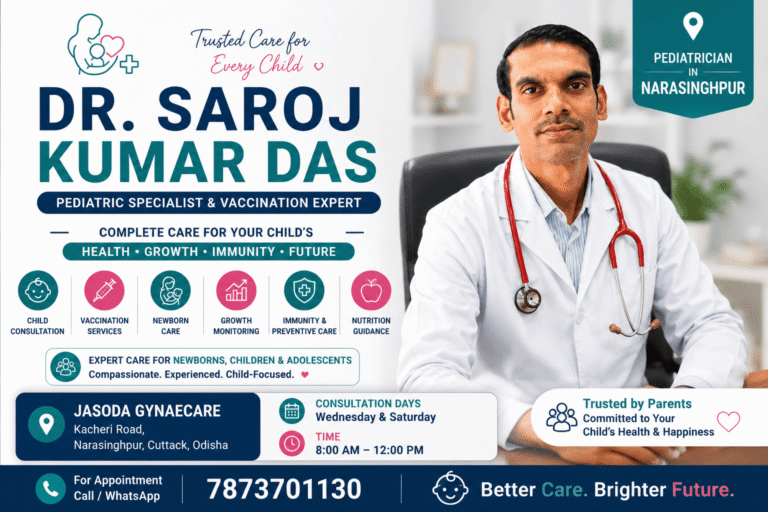
Dr. Saroj Kumar Das provides comprehensive pediatric care for newborns, infants, children, and adolescents. Through careful examination and evidence-based treatment, he helps parents identify whether symptoms are part of a common viral illness or a condition requiring further medical care.
Final Thoughts
Most childhood coughs and colds are mild and improve with time, rest, and proper care. However, parents should remain alert to warning signs such as breathing difficulties, persistent fever, dehydration, or unusual behavior.
Early medical attention when needed can help prevent complications and ensure your child receives the best possible care. Understanding the difference between a common cold and a serious infection allows parents to feel more confident and prepared when caring for their children.